RoHS and REACH are quoted together so often that buyers treat them as one requirement. They are two different laws, applied to different things, with different obligations — and a supplier who cannot tell them apart is a supplier who cannot give you evidence that will survive an audit. This guide sets out what each one actually requires, whether it applies to a cable tie at all, and the specific documents a European buyer should hold on file.
Two Different Laws, Two Different Questions
| RoHS | REACH | |
|---|---|---|
| Full name | Restriction of Hazardous Substances Directive 2011/65/EU | Regulation (EC) No 1907/2006 on chemicals |
| Question it answers | "Does this product contain restricted substances above the limit?" | "Does this article contain a substance of very high concern, and have we told anyone?" |
| What it applies to | Electrical and electronic equipment (EEE) | Substances, mixtures, and articles |
| Core trigger | Fixed limits in homogeneous materials | SVHC above 0.1% w/w at article level |
| Main duty | Comply, document, CE-mark | Communicate, notify, report |
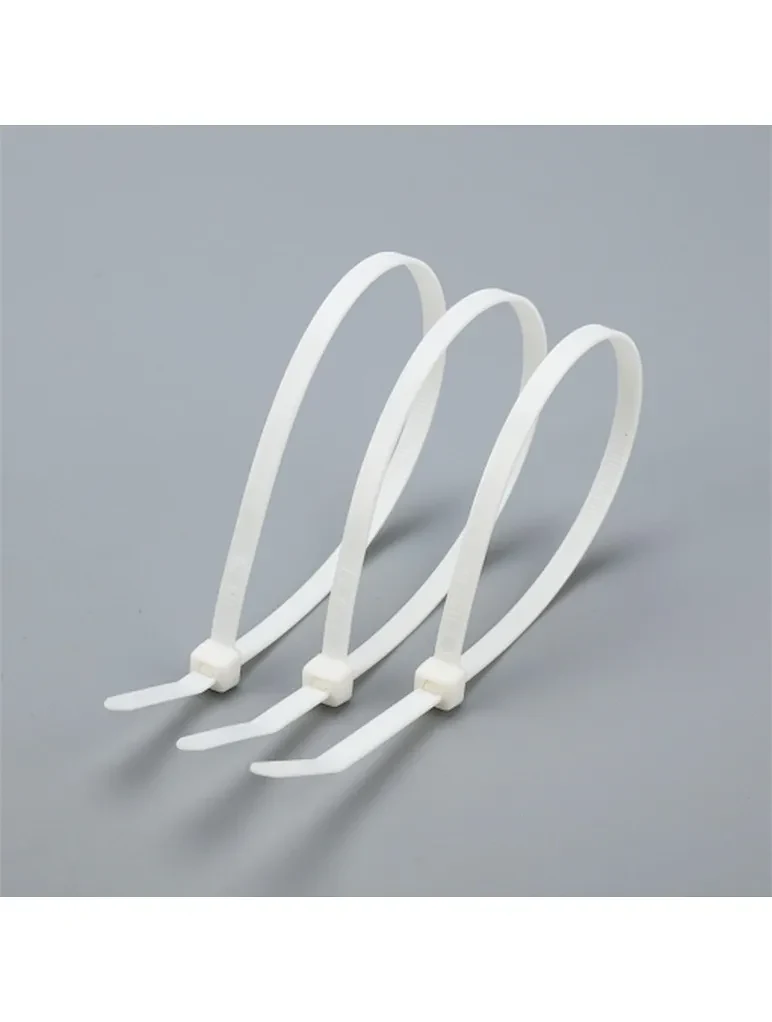
| Applies to a plain plastic cable tie? | Not directly — a cable tie is not EEE (see below) | Yes — a cable tie is an article |
That last row is the point most procurement teams miss. REACH is the stricter of the two for a plastic part, because it does not care whether the part is electrical. If it is an article placed on the EU market, REACH applies.
RoHS: Ten Substances, Measured by Homogeneous Material
Directive 2011/65/EU restricts ten substances. Nine are limited to 0.1% by weight; cadmium is limited to 0.01%. The four phthalates were added by Commission Delegated Directive (EU) 2015/863.
| Substance | Limit | Where it typically hides |
|---|---|---|
| Lead (Pb) | 0.1% | Solders, PVC stabilisers, pigments, brass |
| Mercury (Hg) | 0.1% | Switches, relays, some pigments |
| Cadmium (Cd) | 0.01% | Plating, pigments (yellows, reds), stabilisers |
| Hexavalent chromium (Cr VI) | 0.1% | Anti-corrosion coatings, chromate passivation |
| PBB / PBDE | 0.1% each | Legacy flame retardants in plastics |
| DEHP / BBP / DBP / DIBP | 0.1% each | Plasticisers in flexible PVC |
The limit is applied per homogeneous material, not to the finished product. A homogeneous material is one that cannot be mechanically separated — the plastic body, the plating on a metal part, the insulation on a wire. This is why a product that is 0.0001% lead in total can still fail: one coating or one batch of pigment can breach the limit on its own. It also means "we tested the product and it passed" is a meaningless statement unless the test report lists which homogeneous materials were tested and by which method.
The harmonised standard for the documentation side is EN IEC 63000:2018, which replaced EN 50581 with effect from 18 November 2021. A technical file that still cites EN 50581 is out of date. Where analytical testing is used, the methods come from the IEC 62321 series — different parts for metals, polymers and phthalates. The manufacturer keeps the technical documentation and the EU Declaration of Conformity for 10 years after the product is placed on the market.
Does RoHS Apply to a Cable Tie?
Strictly, no. RoHS governs electrical and electronic equipment, and a cable tie is neither — it has no electrical function. A plastic clip, tie or wire nut is not, by itself, in scope.
In practice, three situations pull these parts into a RoHS conversation anyway:
- As a component of EEE. When a tie, clip or gland is supplied as part of a harness, panel or appliance, the equipment manufacturer has to account for it inside their own compliance evidence. Larger customers simply flow the requirement down and ask for a declaration.
- As a contractual and platform condition. Whether or not the law compels it, distributors and marketplaces treat a RoHS statement as a condition of supply. Refusing to provide one closes doors.
- To keep one document for the whole BOM. Buyers prefer a supplier whose whole range carries a consistent chemical declaration, rather than tracking which part is in scope and which is not.
The honest position to give a customer is this: the part is outside the scope of RoHS, and we nevertheless assess it to the same substance list and document it, so the declaration can be used directly in their file. Over-claiming that a cable tie "is RoHS certified" as though it were mandatory is a small thing that a competent auditor notices.
REACH: It Applies to Every Article
REACH is why a plastic part cannot simply be waved through. Two obligations matter to a component supplier:
- Article 33 — communication. If an article contains a Candidate List substance above 0.1% by weight, suppliers must tell their customers, and must answer a consumer request within 45 days. This duty follows the part through the supply chain.
- Article 7(2) — notification and SCIP. Articles containing an SVHC above the threshold that are placed on the EU market generally trigger notification to ECHA, and the SCIP database requires information on the SVHC present, its location in the article, and safe use.
The Candidate List is not static — that is the part buyers underestimate. As of the 4 February 2026 update it contains 253 entries, following the addition of n-hexane and 4,4′-[2,2,2-trifluoro-1-(trifluoromethyl)ethylidene]diphenol (BPAF) and its salts. Notification for those two entries runs to 4 July 2026. Several entries are group entries, so the number of individual chemicals affected is higher than the entry count.
What this means practically: a REACH declaration has an expiry date. A statement signed two years ago against a then-current list is not evidence of compliance today. Ask when the list version behind the declaration was last compared to ECHA's published Candidate List.
Where a Plastic Part Actually Picks Up an SVHC
It is tempting to assume an unreactive polymer is chemically boring. The risk sits in the additives, not the polymer:
- Colourants and pigments — some pigments have historically been associated with restricted metals and certain azo compounds. Colour is therefore a compliance variable, not a cosmetic one: a new colour needs a fresh substance check.
- Plasticisers — relevant to flexible PVC parts, and the reason the four phthalates were added to RoHS.
- Flame retardants — a flame-retardant grade is a different formulation from the standard one and carries its own substance profile.
- Stabilisers, lubricants and release agents — small percentages, real regulatory relevance.
The consequence for buyers is that a declaration must be tied to a specific material and colour, not to a product family or an illustration. Changing the colour, switching to a V-0 grade, or moving resin supplier invalidates the previous assessment.
What a Supplier Should Give You
A complete, auditable evidence pack looks like this:
- RoHS declaration — naming Directive 2011/65/EU as amended by (EU) 2015/863, listing the ten substances and their limits, and stating the documentation basis (EN IEC 63000:2018).
- REACH SVHC declaration — stating whether any Candidate List substance exceeds 0.1% w/w, and naming the list version or date it was assessed against.
- Material declaration — the resin, the colour, and the additive package, linked to the part number you actually order.
- Third-party test reports where risk justifies them — to IEC 62321 methods, showing which homogeneous materials were tested.
- System certification — ISO 9001, and ISO 14001 / ISO 45001 where environmental and occupational controls matter to your audit.
- A named contact for compliance queries — so that when your own auditor asks in eighteen months, there is someone to ask.
How to Read a Declaration
Four failure modes account for most compliance problems found in a supplier document pack:
- Expired list version. Signed once, never re-checked against new Candidate List entries.
- Declaration without material mapping. "Our products comply" with no link between the statement and a specific part number, resin and colour.
- Supplier-only evidence. A letter from the resin supplier is not a declaration about the finished moulded article, which may contain colourant or regrind that the resin supplier never saw.
- Testing that skips the homogeneous material. A report on the whole clip rather than on the plastic, the pigment and the nail coating separately says very little.
None of these is exotic. All of them are avoidable by asking the four questions above at the quotation stage rather than the audit stage.
Neighbouring Rules Worth Knowing
- POPs Regulation — restricts persistent organic pollutants in articles, including some flame-retardant substances.
- California Proposition 65 — a labelling duty rather than a ban, and relevant if you sell into the US as well as the EU.
- Packaging rules — polybags, cartons and printed inserts carry their own material and heavy-metal limits in several member states; the packaging is not covered by the product declaration.
- WEEE — applies to end-of-life equipment, not to a cable tie, but it is frequently listed alongside RoHS and worth knowing why it does not apply to you.
Where to Start
We assess our cable ties, cable clips and clamps and wire connectors to the RoHS ten-substance list and screen them against the current REACH SVHC Candidate List, with declarations and material certificates issued against the specific part number, resin and colour you order. Our quality system is certified to ISO 9001, ISO 14001, ISO 45001 and IATF 16949.
Ask us for the compliance pack for the exact grades you are specifying — including standard nylon ties, flame-retardant V-0 ties and wire connectors — and we will confirm the substance position in writing. For how our material grades are selected and rated, see cable tie materials explained; for the electrical standards that sit alongside chemical compliance, see UL 62275 vs IEC 62275 and our guide to ETL certification for wire connectors. Full certificate details are on the certifications page, or contact us with your specification.