Buyers in North America ask us one certification question more than any other: "Is the ETL mark as good as UL?" And ever since copper-clad aluminum (CCA) wire started showing up in more residential projects, a second question follows: "Will this connector hold CCA as safely as plain copper?" We now have a document that answers both at once. Our HS-HP double-wing twist-on wire connectors are certified by Intertek to UL 486C and CSA C22.2 No.188 — for copper and copper-clad aluminum conductors.
What the Certificate Actually Says
Intertek issued an Authorization to Mark (ATM) under Report 2510B1892SHA-001, effective April 1, 2026. Here are the key entries, exactly as they appear on the certificate:
| Certificate Field | Detail |
|---|---|
| Certification body | Intertek Testing Services (report issuing office: Shanghai FTZ; certification office: Arlington Heights, IL, USA) |
| Report number | 2510B1892SHA-001 (Control No. 5036198) |
| Product | Splicing Wire Connectors |
| Models covered | HS-HP11, HS-HP12, HS-HP13, HS-HP15, HS-HP17 |
| Standards | UL 486C:2023 Ed.8 + R:21Feb2025 & CSA C22.2 No.188:2023 Ed.5 + U1 |
| Applicant & manufacturer | Yueqing Huihua Electronic Co., Ltd — No. 177 Wei 12 Road, Yueqing Economic Development Zone, Zhejiang, China |
| ATM issued | 1-Apr-2026 |
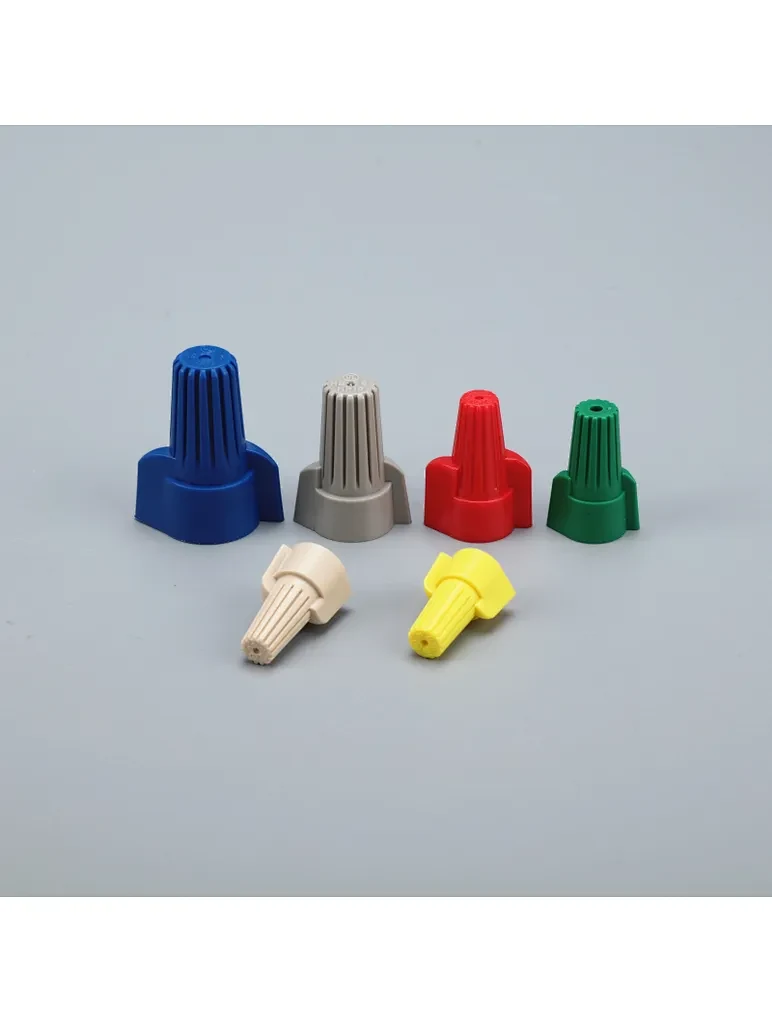
The HS-HP series is our double-wing twist-on wire connector line — a UL94 V-0 PVC shell over a zinc-plated square-wire spring, rated 600 V / 105°C, covering 22–6 AWG across five color-coded sizes. The ETL certification covers exactly the five models on the certificate — HS-HP11, HS-HP12, HS-HP13, HS-HP15 and HS-HP17 — and those are the models that carry the ETL Listed Mark for North America.
ETL vs UL: Why the Mark Is Not a Shortcut
The confusion is understandable. UL Solutions created most of the safety standards used in North America, so its name became the default answer. But the legal requirement in the United States is not "the UL mark" — it is certification by a Nationally Recognized Testing Laboratory (NRTL), a status granted by OSHA. Intertek holds exactly that status, as does UL Solutions. In Canada, the same role is played by the Standards Council of Canada, which accredits Intertek as a Testing Organization and Certification Body.
| UL Listed | ETL Listed | |
|---|---|---|
| Issuing body | UL Solutions (NRTL) | Intertek (NRTL) |
| Standard tested to | UL 486C / CSA C22.2 No.188 | UL 486C / CSA C22.2 No.188 — the same standards |
| Accepted by inspectors & AHJs | Yes | Yes — throughout the US and Canada |
| Accepted by retailers & marketplaces | Yes | Yes — including Amazon, Home Depot, Lowe's, Walmart, Target |
| Factory surveillance | Periodic follow-up inspections | Periodic follow-up inspections |
One practical detail worth knowing: the ETL Listed Mark carries small identifiers — "us" at the 4 o'clock position for US compliance, "c" at the 8 o'clock position for Canadian compliance, or both when a product meets both. Because our listing covers UL 486C (US) and CSA C22.2 No.188 (Canada), the dual-identifier mark is what applies. Intertek also runs random product checks and periodic factory inspections — the certification is maintained, not just issued once.
The CCA Story: What "CC-CU" Means on the Box
Copper-clad aluminum conductor has a aluminum core with a copper skin. It costs less than pure copper, weighs less, and has become attractive in a market where copper prices keep climbing — but only if every accessory in the circuit is actually rated for it. A connector designed and tested for copper alone can run hot on CCA, because the two materials differ in conductivity, strand behavior, and long-term creep characteristics.
The current trinational standard — UL 486C Ed.8 / CSA C22.2 No.188 Ed.5 / NMX-J-548-ANCE Ed.5, revised February 21, 2025 — spells out exactly how a connector must declare which conductors it accepts. The container marking codes are:
| Marking | Meaning |
|---|---|
| CU | Copper conductors only |
| AL | Aluminum conductors only |
| CC | Copper-clad aluminum only |
| CC-CU | Copper-clad aluminum and copper conductors |
| CC-AL | Copper-clad aluminum and aluminum conductors |
| AL-CU / CU-AL | Aluminum, copper-clad aluminum and copper (intermixed — dry locations) |
Our HS-HP series is certified for copper (CU) and copper-clad aluminum (CCA) conductors — the "CC-CU" combination. For a distributor or panel builder, that means one SKU serves both conductor types without inventory splitting.
One compliance point most sellers never mention: the standard permits CCA conductors only in the United States, in accordance with the National Electrical Code (NFPA 70). Canada and Mexico do not allow CCA construction under this standard. If a supplier offers you "CCA-rated" connectors with a single North American mark and no explanation of that geographic limit, that is a question worth asking — the answer tells you how well they actually read their own certificate.
How the Standard Tests CCA — It Is Not a Rubber Stamp
The February 2025 revision of UL 486C strengthened the CCA requirements specifically. Two points matter for buyers:
- Separate specimen sets per conductor type. A connector rated for copper, CCA (and aluminum) must pass the full test program — current cycling, temperature rise, pull-out force, dielectric — separately for each conductor material, per Table 7.3A. There is no "tested on copper, assume it works on CCA."
- Current cycling with stability limits. Specimens go through hundreds of on/off current cycles with strict limits on temperature-rise drift and resistance stability. This is the test that exposes a spring or shell design that loosens over years of thermal cycling — the classic failure mode of low-grade twist-on connectors.
The eighth edition also added optional line-side-of-service qualification (Annex I), flashover testing for insulated connectors, and clarified intermixed Al-Cu connection marking. When we say "tested to UL 486C Ed.8 + R:21Feb2025," that is the full, current program — not a grandfathered old report.
Belt and Braces: ETL and UL on the Same Series
Sharp-eyed customers may notice the same HS-HP family is also covered under UL File E308136 (U.S. and Canada records) for our HP-series splicing wire connectors. So why hold both?
- Buyer preference varies by account. Some US retail and OEM specification sheets still name "UL" out of habit; others accept any NRTL mark. Holding both means we match your paperwork instead of debating it.
- Same factory, same production line, same spring and shell. Both certificates list Yueqing Huihua Electronic Co., Ltd as the manufacturer. There is no "certificate version" and "export version" of the product — one build, two marks available.
- Audit-proof sourcing. If your compliance team verifies certificates (as it should), every claim on this page can be cross-checked against Intertek's ETL directory and UL Product iQ.
What to Check When You Source "Certified" Wire Connectors
Not every certificate you will be shown says the same thing. Before comparing quotes, ask for the certificate itself and check three things:
- Models. A certification covers listed model numbers, not "our connectors in general." Our ETL listing names HS-HP11 / 12 / 13 / 15 / 17 explicitly.
- Standard edition. "UL 486C" alone is not enough — which edition and revision? A 2021 Ed.7 report predates the tightened CCA requirements. Ours reads UL 486C:2023 Ed.8 + R:21Feb2025.
- Conductor scope. Look for the CU / CC / CC-CU marking rules in Section 10.4 of the standard and match them to the container marking your supplier actually prints. If the box says CU only, do not use it on CCA jobs, no matter what the sales sheet promises.
See Them at the Canton Fair
We will be exhibiting at the 140th Canton Fair, October 15–19, 2026, Booth 16.3G30 — the ETL and UL certificates will be on the table next to the connectors, and you are welcome to test-strip a CCA splice by hand before you talk price. If you cannot make it, our certifications page lists every certificate we hold, or contact us directly and we will send the documents.
Frequently Asked Questions
Is ETL Listed accepted the same as UL Listed by electrical inspectors?
Yes. Intertek is an OSHA-recognized NRTL, and AHJs, inspectors, and regulators across the US and Canada accept the ETL Listed Mark as proof of compliance with the NEC and CEC. The product is tested to the same UL 486C / CSA C22.2 No.188 standards a UL-listed connector is tested to.
Can I use these wire connectors on copper-clad aluminum wire?
Yes — the HS-HP series (HS-HP11 through HS-HP17) is certified for both copper and copper-clad aluminum conductors, corresponding to the "CC-CU" marking scheme. Note that CCA is permitted in the United States per the NEC; it is not an allowed construction in Canada or Mexico under this standard.
What wire range do the HS-HP connectors cover?
The HS-HP range covers 22–6 AWG across five color-coded sizes (yellow, tan, red, gray, blue), rated 600 V / 105°C, with a UL94 V-0 PVC shell and zinc-plated square-wire spring. See the double-wing wire connectors product page for the full size table.
How is a connector certified for CCA different from a regular wire nut?
Under UL 486C, a CCA-rated connector must pass the complete test program using separate specimen sets for each conductor material — current cycling, temperature rise, pull-out, and dielectric tests. A connector certified for copper only has not demonstrated those results on CCA, and per the standard's marking rules its container may only be marked "CU."
Have questions about the ETL listing, CCA applications, or private-label packing? Contact us — we answer with the certificate, not the brochure.