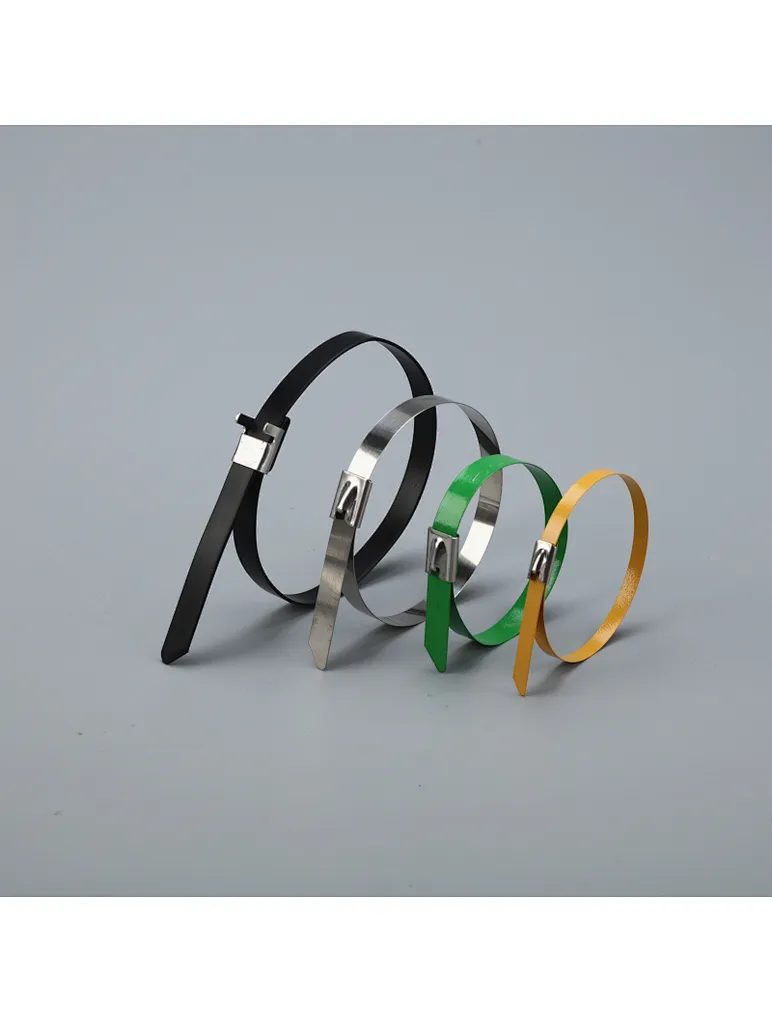
Nylon and stainless steel are the two dominant cable tie families in industrial cable management — and buyers frequently ask which one they should specify. The honest answer: neither is universally better. Each has a clear operating envelope, and choosing the wrong family means either paying 20× more than necessary or watching ties fail in the field. This guide compares them on the factors that actually matter — temperature, UV, chemicals, strength, flame performance, and total cost — then gives you a decision path you can apply to any project.
Why This Choice Matters More Than It Seems
A cable tie looks like a commodity part, but the material family decides its entire performance envelope. Nylon ties are cheap, light, non-conductive, and perfectly adequate for 90% of indoor industrial applications. Stainless steel ties survive environments that destroy nylon in weeks — open flame, continuous heat above +150°C, marine salt spray, chemical washdown — but they cost more, weigh more, conduct electricity, and can cut softer cables if tension is wrong. The mistake most buyers make is standardizing on one family and forcing every application into it.
Head-to-Head: Nylon vs. Stainless Steel
Here is the comparison table procurement teams ask for — the properties that change a specification decision, side by side.
| Property | Nylon (PA66) | Stainless steel (304/316) |
|---|---|---|
| Continuous temperature | -40°C to +85°C (heat-stabilized to +105°C~+150°C) | -80°C to +538°C (304), higher for 316 |
| UV / outdoor resistance | Poor without carbon-black stabilization; degrades over time | Excellent — virtually unaffected by sunlight |
| Chemical resistance | Good against oils & greases; poor against strong acids | Excellent against most acids, salts, solvents |
| Flame behavior | Burns (V-0 grades self-extinguish) | Non-flammable — survives direct fire |
| Tensile strength | 8–130 kg typical, light to heavy duty | Highest strength per size, retains it at extreme heat |
| Electrical | Insulating (non-conductive) | Conductive — needs care near live conductors |
| Weight | Very light | Significantly heavier |
| Relative cost | Low (base reference) | Roughly 5–20× nylon, size dependent |
| Installation | Hand or automatic tie guns, reel-fed available | Manual or special steel-tie tools; cut ends are sharp |
Two families, two very different cost structures. The decision is really an environment question: what will the tie be exposed to, and for how long?
When to Choose Nylon Cable Ties
For most indoor, temperature-controlled applications, nylon cable ties are the right engineering and economic choice. Nylon wins when:
- The environment stays under +85°C. Electronics, switchgear, machine control panels, office and building wiring — standard PA66 self-locking ties handle this at the lowest cost.
- Heat runs hotter but stays continuous. Near motors, transformers, LED drivers or engine compartments, heat-stabilized ties (rated +105°C+) and PA46 grades (up to +150°C) cover most cases without jumping to steel.
- You need UL94 V-0 flame ratings. For appliances and public-transport interiors, flame-retardant nylon ties pass the same flammability tests most end products require.
- Electrical insulation matters. Nylon's non-conductive body is a real safety feature around live conductors and busbars.
- Weight is a constraint. Aerospace, automotive harnesses, and portable equipment all benefit from nylon's negligible mass.
- Automated assembly. Reel-fed and push-mount configurations integrate with high-speed harness lines far better than steel.
Cold-chain operations are a special nylon case: our cold-weather ties retain flexibility where standard nylon embrittles below -40°C.
When to Choose Stainless Steel Cable Ties
Stainless steel cable ties are not a premium upgrade — they are the only sensible option in a defined set of conditions. Choose steel when:
- Continuous temperature exceeds +150°C. Furnaces, kilns, exhaust systems, turbines — anywhere the plastic ceiling is blown through. Steel holds its clamping force at +500°C+.
- The assembly must survive fire. Fire-rated cable trays, emergency systems, tunnel and marine installations: steel does not propagate flame and keeps cables secured during a fire.
- Outdoor UV exposure is permanent. Rooftops, masts, substations, signage — steel shrugs off decades of sunlight that would embrittle unstabilized nylon.
- Marine, chemical, or washdown environments. Salt spray, acids, and aggressive cleaning agents destroy nylon over time; 316 stainless resists them.
- Maximum security and tamper resistance. Steel ball-lock ties are widely used for sealing, security, and evidence applications where removal must be visible.
If your application is mostly nylon territory but has one hot or outdoor zone, the smart move is to keep both families in your approved vendor list and spec per zone — not to standardize on the worst-case material everywhere.
The Hybrid Option: Coated (Steel-Barb) Ties
Between the two families sits a hybrid that buyers often overlook: stainless steel barb ties with a nylon coating. A steel core provides high strength and heat resistance, while the nylon coating protects the cable jacket from the sharp steel edge and adds a degree of insulation. These are the standard choice in automotive underhood wiring, heavy machinery, and any application that combines vibration, heat, and a need to protect the harness.
Rule of thumb: use coated steel where you need steel's temperature or strength but cannot tolerate bare metal cutting into soft cable jackets.
Five Common Misconceptions
These myths cause more specification errors than any technical gap:
- "Steel is always stronger." In the size range where both exist, a heavy-duty nylon tie can match or exceed the loop tensile of a thin steel tie — but only steel keeps that strength at +200°C.
- "Stainless never corrodes." 304 can suffer crevice corrosion in chloride environments; for marine, specify 316 grade. Always confirm the alloy with your supplier.
- "Nylon can't be flame rated." UL94 V-0 flame-retardant nylon exists and passes the same tests used for appliance safety. It self-extinguishes, it just does not survive a direct furnace fire.
- "One material for the whole plant." Standardizing on all-nylon or all-steel is the most expensive simplification you can make — the two families complement each other.
- "Any stainless is the same." Ties sold as "stainless" can be 201, 304, or 316 — vastly different corrosion performance. Ask for the mill certificate.
Decision Checklist for Your Next Order
Walk this checklist in order and the right family selects itself:
- Temperature: above +150°C continuous → steel; below → nylon (heat-stabilized grades up to +150°C)
- Fire rating: must survive structural fire → steel; self-extinguish requirement → V-0 nylon
- Outdoor UV: permanent exposure → steel; partial → black UV-stabilized nylon
- Chemicals / salt: aggressive or marine → 316 steel; oils and greases → nylon is fine
- Electrical: must insulate → nylon; must bond/ground → steel
- Automated install: tie guns and reel-fed → nylon
- Cable protection: risk of steel cutting jackets → coated steel-barb hybrid
When the checklist says "nylon," choose from our full cable tie range — standard, heat-stabilized, flame-retardant, cold-weather, metal-detectable, and low-profile series. When it says "steel," our 304/316 stainless range covers banding, ball-lock, and coated variants with documented material certificates.
Not sure after reading? Send us your application details — temperature, exposure, and a photo of the installation — and our engineers will recommend the exact tie family with samples in days.