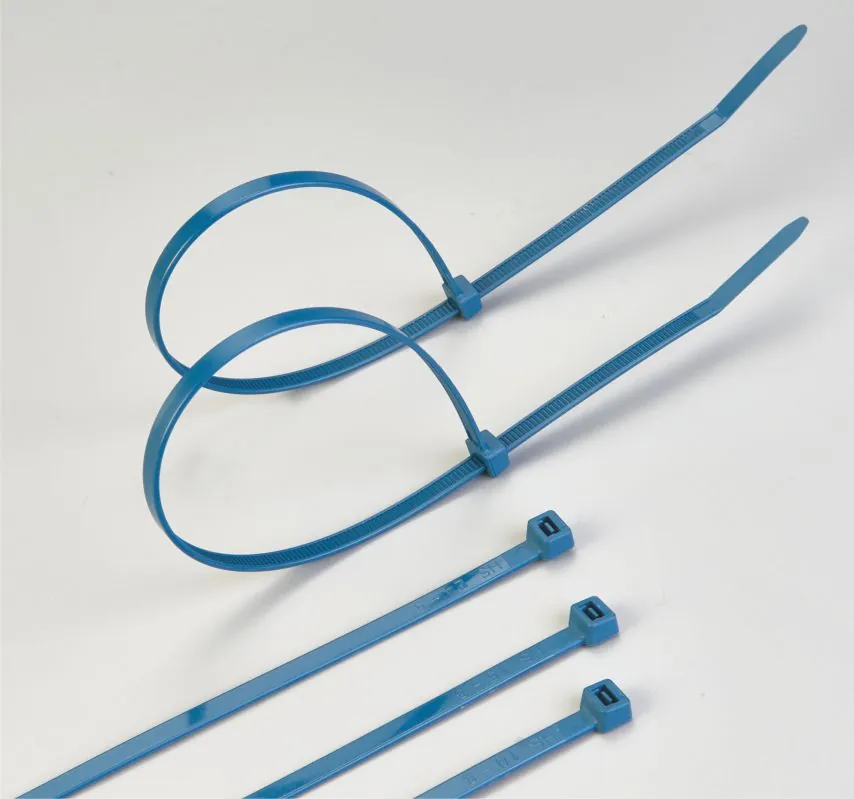
In food and pharmaceutical plants, a lost cable tie is not a housekeeping issue — it is a contamination event. Foreign-object control programs built on HACCP, IFS, BRCGS and FDA requirements assume that every material on the production line can be found if it enters the product stream. Standard nylon ties defeat that assumption: they are invisible to metal detectors and near-invisible on X-ray. Metal detectable cable ties exist specifically to close that gap. This guide explains how they work, where they are genuinely required, and how to specify them without overpaying.
Why Food Plants Care About a Plastic Tie
Walk any food production line and you will find cable ties — securing air lines, sensor cables, guard panels, washdown hoses and conveyor components. Routine maintenance and cleaning dislodge a small percentage of them. When that happens near open product, the tie can end up in the food stream. The plant's foreign-body controls then have one job: find it before it reaches the consumer.
That is where conventional nylon fails. A plain PA66 tie:
- Is not detected by metal detectors — it contains no metal for the coil to sense.
- Blends into product on X-ray — its density is too close to many foods to produce a reliable image.
- Is hard to spot visually — natural or black ties are nearly invisible against most ingredients.
Metal detectable ties solve the first two problems by compounding metal particles into the nylon. The tie keeps the mechanical behavior of a normal nylon tie, but a metal detector or X-ray system sees it clearly if it ever enters the product stream.
How Metal Detectable Ties Work
The tie is molded from nylon loaded with a food-safe metal additive. From a purchasing perspective, the practical implications are:
- Detector compatibility: the compound is formulated so the tie triggers typical metal-detection and X-ray inspection equipment used in food lines. If your plant relies primarily on X-ray, confirm the grade is X-ray visible.
- Same fastening performance: they install, tension and release like standard ties — no special tooling on the line.
- Color coding: most are molded in blue, a color that does not occur naturally in food. Even before detection equipment is involved, blue gives operators a visual cue during inspection and makes a lost tie far easier to spot.
Do not confuse "metal detectable" with "stainless steel." Stainless ties are a different product family used for heat and corrosion resistance. Metal detectable nylon ties are chosen specifically for inspection compatibility in controlled environments.
Where They Are Used
| Sector | Typical securing points | Why detectable matters |
|---|---|---|
| Food processing | Conveyor guards, sensor and air lines, washdown hoses, sieves | Open product; HACCP foreign-body controls |
| Beverage & dairy | Filling line utilities, CIP skids, valve proximity wiring | High-speed lines, frequent washdown |
| Meat, poultry & seafood | Cutting room equipment, trimming line fixtures | Highest contamination risk; strict audits |
| Pharmaceutical | Blister lines, cleanroom cable management, tablet presses | GMP inspection regimes |
| Pet food & feed | Bagging lines, mixers, conveying equipment | Detector-equipped end-of-line inspection |
If your plant runs finished product through a metal detector or X-ray at the end of the line, every plastic consumable upstream — ties included — should be detectable. If you do not run inspection equipment, detectable ties still help through color contrast, but the bigger gap is the inspection step itself.
Specifying: A Buyer's Checklist
Use this checklist when you request quotes — it is the difference between a tie that passes the audit and a tie that only looks the part.
- 1. Confirm the detection method. Ask the supplier: will this grade trigger your plant's equipment — metal detector, X-ray, or both? Request a test sample and run it through your actual line before bulk ordering.
- 2. Verify the operating temperature. Processing areas swing between cold storage and hot washdown. Standard detectable ties suit most ambient and washdown conditions; if the tie sits near steam or ovens, confirm the temperature rating. For cold-chain use, our cold-weather ties are the relevant family — ask whether a detectable cold-grade option fits your program.
- 3. Check chemical resistance. CIP (clean-in-place) chemicals, chlorine and caustic cleaners are aggressive to nylon. Tell the supplier which sanitizers you use and how often.
- 4. Choose a controlled color. Blue is the conventional choice because it does not appear in food. If your site already uses a color-code system, match it.
- 5. Decide reusable vs. one-time. For scheduled maintenance points, releasable ties let technicians open and re-secure without cutting — fewer ties consumed, less debris risk. For permanent securing, standard one-piece ties are fine.
- 6. Plan the inspection routine. A detectable tie only helps if the plant actually checks for it. Pair the product with a documented "tie count" or visual sweep procedure in the zone.
Common Mistakes in Procurement
- Buying detectable ties everywhere "just in case." They cost more than standard nylon. Use them in zones where product is open or equipment is inspected; standard ties are acceptable in non-product areas.
- Assuming every "detectable" grade works with every detector. Detection depends on additive load, tie size and the equipment's sensitivity. Test on your line — a 3×150 mm tie and a 9×400 mm tie are very different detection challenges.
- Ignoring the tie's own failure mode. A detectable tie that is lost is findable; one that is ground up into tiny fragments is a harder detection problem. Keep tie ends trimmed and account for every tie in critical zones.
- Skipping documentation. Auditors ask for material statements and traceability. Buy from a supplier who can provide material compliance documentation for the detectable compound.
Sourcing from a Manufacturer That Understands Food Plants
We have molded cable ties since 1997, and our metal detectable cable ties are specified by food and pharmaceutical lines that run end-of-line inspection. Because we manufacture rather than resell, we can tell you exactly what is in the compound, provide samples for your detector test, and adjust length, strength and color to your program. Our wider cable tie range covers the food plant end to end — detectable ties for product zones, standard ties for back-of-house, releasable ties for maintenance, and cold-weather grades for chillers.
Before you place a bulk order, ask us for free samples and run them through your metal detector or X-ray. If they do not trigger your equipment, we do not want your order.